

Psycho Turns 65 - A Commentary
By Colton Claye
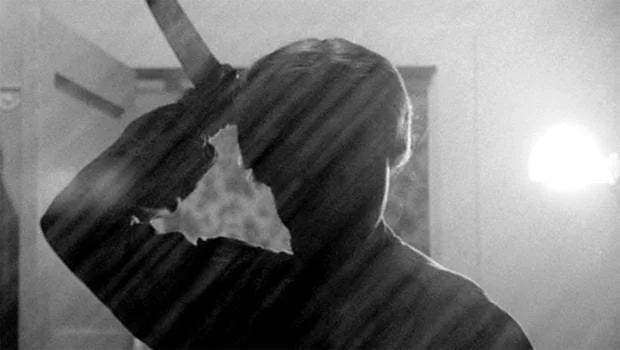
I’ve seen Psycho dozens of times, but last year I had the fortune of experiencing it in a cinema for the very first time. There aren't many movies in general that regularly return to theatres for over six decades and very few of those could be considered horror films.
That a single scene in Psycho inspired the entire slasher genre of movies would be enough to secure its place in history but that doesn’t even begin to graze the glaze of what makes it a masterpiece.
The shower scene is, of course, one of the most iconic scenes in the history of film (possibly the most iconic), powerful all on its own without any context. But what makes it more unsettling is that the scene follows Marion's conversation with Norman, an exchange which leads her to change course, make the right choice. So, of course, the shower represents Marion’s cleansing in a deeper sense. And then she is stabbed to death. Norman, both helps her find the right path and still makes her pay with her life for having ever chosen the wrong one.
That sort of dissonance is all over the film and, more importantly and more impressively, in the mind of the viewer. I had the theatre to myself, and it helped me appreciate on another level how easily Hitchcock gets the viewer involved in the film. You recognize you are as unsteady as the characters and events on the screen. In a move that was quite daring, the lead actress is killed off before the film is even halfway through. We have been seeing things through one character's eyes and now find ourselves seeing it through another character's eyes and we have a whole different story to follow. Very quickly, we transfer allegiances without even making a conscious choice. We find ourselves hoping the victim's car will submerge completely as we, at this point, sympathize with Norman. And in a remarkably economical section of dialogue where California Charlie greets Marion and talks about the first customer of the day being trouble, Hitchcock makes us feel some comic relief in the exact instant that we also feel the panic Marion is experiencing.
You don't just fear what is coming in the movie, but you become uncertain of your own ideas of what is right or wrong. Yet in the very next moment we go on so sure of ourselves, setting our own “private trap”: we watch Marion's sister desperately trying to find Norman's mother, we feel a danger she can't anticipate, only for Hitchcock to reveal something else entirely which we didn’t anticipate.
Part of Hitchcock’s brilliance was knowing who to collaborate with. For the soundtrack, he brought in Bernard Herrmann, whose first film score was for Citizen Kane and final film score Taxi Driver. He also scored Hitchcock’s Vertigo and North by Northwest (talk about a great resume). Herrmann delivered a haunting and iconic score, creating tension right from the opening credits. It was Herrmann’s idea to add music for the shower scene, and he delivered a cultural moment with the score, which feels as harsh and cold as the blade we see on screen. It left such an impression that it also inspired the use of the "stabbing” strings on “Eleanor Rigby” (also worth noting here is that there are obvious similarities between Norman’s isolated and mummied mother and Eleanor).
The use of black and white, while done for budgetary reasons rather than an artistic one, emphasizes the contrasts and sharpens the clash between light and shadow.
While the viewer likely hasn’t done anything as gruesome as Norman Bates, Hitchcock reveals our own fractured state, how we put trust where it doesn't belong and relate to dangerous minds more than we care to admit. The audience goes uncredited in the film, but Hitchcock knows we are all helping to drive the tension.
About the author
Colton Claye, a native of Milwaukee, WI, is an author, songwriter, visual artist, and an advocate for all conscious creatures. His work has been featured in a wide variety of print and digital publications. His latest release, The Percussive Sun, is a collection of surrealist poetry. He sends you warm regards