

Love at the End of the World
By Gene Lass
Prologue
The apocalypse wasn’t so bad, really. A new disease was discovered in Africa, with outbreaks in the U.S. a week later. The week after, it was found in Canada, Mexico, and Australia. Thought to have been brought back by missionaries, it was nicknamed “Missionary Disease”, though the official name came to be FUG, for “Fatally Ulcerative Gastritis.” Symptoms initially presented as sudden severe stomach ache, quickly progressing to vomiting blood as the victim’s stomach lining shredded and the abdomen filled with blood. Vomiting increased until the victim bled to death or choked on his or her own blood, dying in agony.
The CDC said, “We’ve got this!” and word spread that the world was saved. But the CDC got it wrong. Their prescribed treatment and containment methods were ineffective, people kept getting sick, and the disease spread to Europe, Central America, South America, and Asia. By that time, the World Health Organization (WHO) was working on a cure using teams from around the world.
The WHO preventive treatment was a partial success. While it was thought to have a success rate of about 80%, in time it appeared only 20% of those treated became immune to the virus, while 25% actually got the virus because of the treatment. Worse, the disease mutated in those who received the mRNA treatment, becoming more lethal, more aggressive, and eventually wiping out most of the world. Under the more severe strain, victims died sometimes in less than two hours, puking geysers of blood, leaving dead bodies that were disturbingly bloated with weird, hard abdomens. The disease was so aggressive and so common among the urban homeless that bloated dead bodies seen on city streets and in alleyways came to be called, “Fugs” or “Fuggos,” though the name also applied to people found dead in their homes or in fields.
Sean didn’t get sick. He didn’t get the bug the first time around, and didn’t get inoculated. He wasn’t afraid of the cure, he just wasn’t interested in it. He was 46 years old and was at the point in his life when he wasn’t going to do anything to take or even shorten his life, but he wasn’t going to do anything to prolong it, either. So, no organic diet, no vaccinations, no vitamins, no exercise regimen, but no smoking, drugs, extreme sports, or sky diving either. He thought of it as balance. If he lived, oh well. If he died, that was okay, too.
He stopped going to work when there wasn’t enough to do. He worked as a sorter at the Post Office, and after the bug had clearly reached the tipping point, business dropped off. Half the population was either dead or had run for the hills, so there was less mail to process. Similarly, even after half the post office staff died or quit showing up, there wasn’t a lot to do. When Sean’s boss, Bruce, died, an astonishingly long and agonizing 3 days after getting the virus, Sean stopped going in. Despite this, thanks to autodeposit and centralized accounting, his checks kept coming.
Even that stopped mattering after a while. With three-quarters of humanity gone, money became meaningless. There was the expected looting of stores as people stockpiled supplies and made their dreams of free high-definition 3D TVs come true, but eventually the stockpilers died and their homes became new free stores for others to shop in. The black market of supplies envisioned in post-apocalyptic films like “Mad Max” never became real, because of the law of supply and demand. As people died, demand went down, leaving only supply.
When Sean was the only one left, about a year after the initial outbreak, Dubuque became one big store open 24/7 that he could shop by himself, and he was fine with that. He didn’t like shopping much, but if he had to go, he preferred to shop alone.
1
Sean wasn’t very social, even when everyone was alive, so when they were dead his lifestyle didn’t change. Well, it did, but not in overly unpleasant ways.
He spent a lot of time reading or watching TV. When, a few months after most of the world had died, not only streaming services but the Internet started to glitch before staggering and going into full collapse, then death, Sean gave up on his computer and dusted off his DVD player. With everything on DVD and the library nearby, he could watch whatever he wanted, for as long as it took. Two blocks in the other direction from his place was Barnes and Noble where they had all the things his library didn’t have, and coffee, and no one left alive to say he couldn’t go home with anything he wanted.
He still mowed his lawn from time to time. For a while he even mowed his neighbors’ lawns. There was no use in things looking unkempt, it took little effort with a riding mower, and he had plenty of time. Plus, it kept wildlife from getting too close. Deer and birds, he didn’t mind, but coyotes, wolves, and even bobcats had become a greater issue and he preferred not to encounter them face to face.
Houses became viable resources, and after a few weeks, he learned to use the lawns to indicate houses that still had things he could use, and houses that were tapped out. Sure, he could have just brought all resources back to his own home, but why bother? No one else was scavenging. Sometimes he brought things back to his house, but then started marking “good” houses vs. “empty” houses with their lawns. If there were still things inside a home, he would mow the lawn. If he had taken all the food, batteries, and other significant things out of a home, he let the lawn grow and opened all the doors and windows. If he hadn’t been in a house yet, the lawn was long and the doors and windows were closed.
He didn’t worry about furniture. Every house had furniture, which either gave him a place to sit or sleep if he was nearby, or gave him something to burn in cold weather. He already had clothes and had no one to impress. Since he was of average size and build, he could grab something his size wherever he wanted, whether it was a house or a traditional store.
The virus didn’t kill everyone at once. As is usually the case with widespread diseases like colds or the flu, it hit the sick, elderly, and very young first. Then it came around to everyone else, who lasted a bit longer. So, in a family of 5, maybe 1 or 2 would have died at home, usually in the bedroom or bathroom. The rest were already in the cemetery or cremated. Hospitals very quickly became storehouses for the dead as people in the second wave died faster than they could be dealt with. With the second wave, symptoms started to show up to 3 days before they died. A sharp, sudden pain in the upper stomach that didn’t go away, it just got worse. People online started to refer to it as, “When the clock starts ticking.” You knew you’d be dead that day, or in no more than 3 days.
Which is why some chose to die at home. Why spend your last days with hundreds of other sick people, watching and listening to them die, when you could be at home? Especially when your children, your parents, possibly your spouse, and many of your friends were already gone. Just go home and die. Some chose to end it sooner. Others rode it out to the bitter end. But they were home.
Which is why when Sean found them, he often left them there. Sometimes he buried them, but he was only one man. Even when he used the backhoe he appropriated from the city to dig the holes, it was a struggle to get people outside for burial. That was why he initially left the doors open. Once he got what he needed out of a house, he decided to just let nature take its course. If he didn’t know someone, if they didn’t strike him in some way as needing some sort of special treatment, it was better to just let the birds in, the flies, and the feral cats. As Josey Wales said, “Buzzards gotta eat, same as worms.”
Sometimes the animals chose to stay in the house, which was fine by Sean. Someone should use the house. It wasn’t going to be him, and there were no other people. Congratulations, crows. You’ve inherited a $300,000 3-bedroom, 2 bath birdhouse to keep you out of the rain. All the more reason to keep some of the lawns trimmed. It was a line of demarcation between what Sean thought of as the last bastion of mankind and what nature could have back.
Two houses on Sean’s block were basically extensions of his own. Across the street was the Klimas’ house. They had been avid hunters and may have been survivalists, which Sean found ironic because now they were dead. Sean never talked to them much before, but now he thought the world of them because they had an industrial freezer in their basement full of high-quality meat. Beef, pork chops, pork loin, lamb chops, and plenty of venison. In their main freezer upstairs was chicken breasts, turkey breast, and even frozen leftovers like lasagna and casseroles. When Sean wanted to treat himself to a home-cooked meal, the Klimas still had some, and a generator that worked on gas or solar power to keep the freezer going.
They also had guns, lots of them. Handguns, rifles ammo, bows and arrows, knives, fishing poles and tackle, gear for all weather. Based on the variety of weapons in the den, basement, and garage, and the antlers, hides, and fish mounted throughout the place, it seemed as if they regularly hunted or fished for everything they could, in every season. Sean had never shot a gun before, but he was in an archery league in his teens and had kept up with it through his 20s. Now that there was little else to do, he took to shooting at the hay bale targets the Klimas had in their garage for fun. For protection he took to carrying a .44 pistol whenever he went out, and he had a shotgun back at the house. He wasn’t worried about looters or roving gangs or any of that end of the world stuff – it had been months since he’d seen or heard another human. It was in case one of more of the animals decided it was time to give up on corpses or smaller prey and eat him.
Two doors down from the Klimas were the Iaccinos. They were an older couple with a passion for gardening and canning. Sean had a passion for neither, so he appreciated the work they put in to their fruits and vegetables, so he could eat them. He had to put in the basic work of weeding their garden, which gave him something to do, but he had stopped trying to keep pests away. There was more food than he could eat, so he let the rabbits and deer have their share. Plus, if the Klimas ran out of venison, he could just wait by the Iaccino’s garden and wait for a deer to arrive. If no deer showed, he’d get a rabbit, which would be considerably fatter, slower, and less timid after loading up on their produce.
Sean had a well, which took care of his water needs, and there was the generator at his house and at the Klimas’. People had died so quickly that there was gas in every vehicle, and at least one vehicle in every garage he had found so far, plus often additional cans of gas for their mowers and snow blowers. There was even still gas at the gas station a few blocks away. What was starting to challenge him was the quiet.
Before the end of the world, the neighborhood was often too loud. A lot of work went into those well-manicured lawns, and from March or April until November, 7 AM to 9 PM, the sound of mowers and trimmers was almost incessant. There was always at least one, but sometimes there were several, perhaps 3 on his block at the same time. Now it was so still Sean could hear the wind. It was eerie. Sure, there were the coyotes howling at night, and birds, but he was starting to wish he could hear the rhythmic thump of a basketball somewhere on the block. It was one of the sounds that used to get to him in the old days after a while, but now it might be a bit comforting, even nostalgic.
2
One day, tired of shopping from the same few convenience stores and the homes of the dead, Sean decided to go to the mall, specifically Kennedy Mall, which didn’t really have anything he needed, but he wanted to look anyway. To save gas, he rode his bike over, half expecting to see zombies roving the area like in “Dawn of the Dead.” There were none, but it was clear some looters had been in there at some point. A few doors were broken, and many of the front windows. He expected to see coyote or bobcat scat near the entrance, or see the dried patches of their urine on the concrete walk out front, or the tiled floor within, but there were none. Maybe the mall still smelled too much like people. Still, he checked his gun in its holster. Typically, if he heard something move nearby, a shot into the air would bring the animal out of its hiding place and send it running. The mall was bigger than any of the houses he had cleared out, so there might easily be multiple animals, or a pack of them, who wouldn’t be as easily dissuaded. He hoped not, but then thought if he could survive Black Friday at a mall, he could survive a few bobcats or coyotes, maybe a bear.
The mall was almost a one-stop documentary of the Missionary Disease. The mall stopped opening – the gates and barriers were down over most of the stores. When a store, like Walgreen’s, was big enough for a glass front with a door, the door was locked. But people came anyway, looting in the absence of workers or law enforcement. Foot Locker and other shoe stores were forced open, shelves picked clean, boxes strewn everywhere. The same was true of cell phone stores. Best Buy was a wasteland. A forklift appeared to have been used to move TVs too big to carry, until the forklift crashed and the TV was broken.
Sean shook his head. Sporting goods, clothing, food, all left untouched. People rushed to take what they wanted but couldn’t afford, then died before they could use it. There were a few dead fugs here and there, not many. From the flies and smells he was sure there were a few in the bathrooms. He had no plan to go there.
He grabbed a shopping cart from the sporting goods store and loaded up on first aid, books, magazines, and snack foods at Walgreen’s, then clothing and other essentials throughout the mall. Feeling hungry, he went to the food court, heated up a can of Hormel chili, dished it in a Styrofoam bowl with a plastic spoon, then made his way through various employee access areas, propping doors open along the way, until he was on the roof. Weather-wise, it was a nice day.
Sean had never gone out on a roof before. Aside from one trip to St. Louis, where he went up to the top of the Arch, he had never really been higher than two stories at any time in his life. He had lived his life in and around Dubuque, sometimes venturing out for low-key vacations, but he had never been in a skyscraper, though he’d been in an airplane. So, this was the first time he’d been this high off the ground in his home town without flying. He liked it. Warmed by the sun, seeing some birds still flying above him while others flew around him, it was an experience he planned to repeat again soon.
Then he saw the smoke.
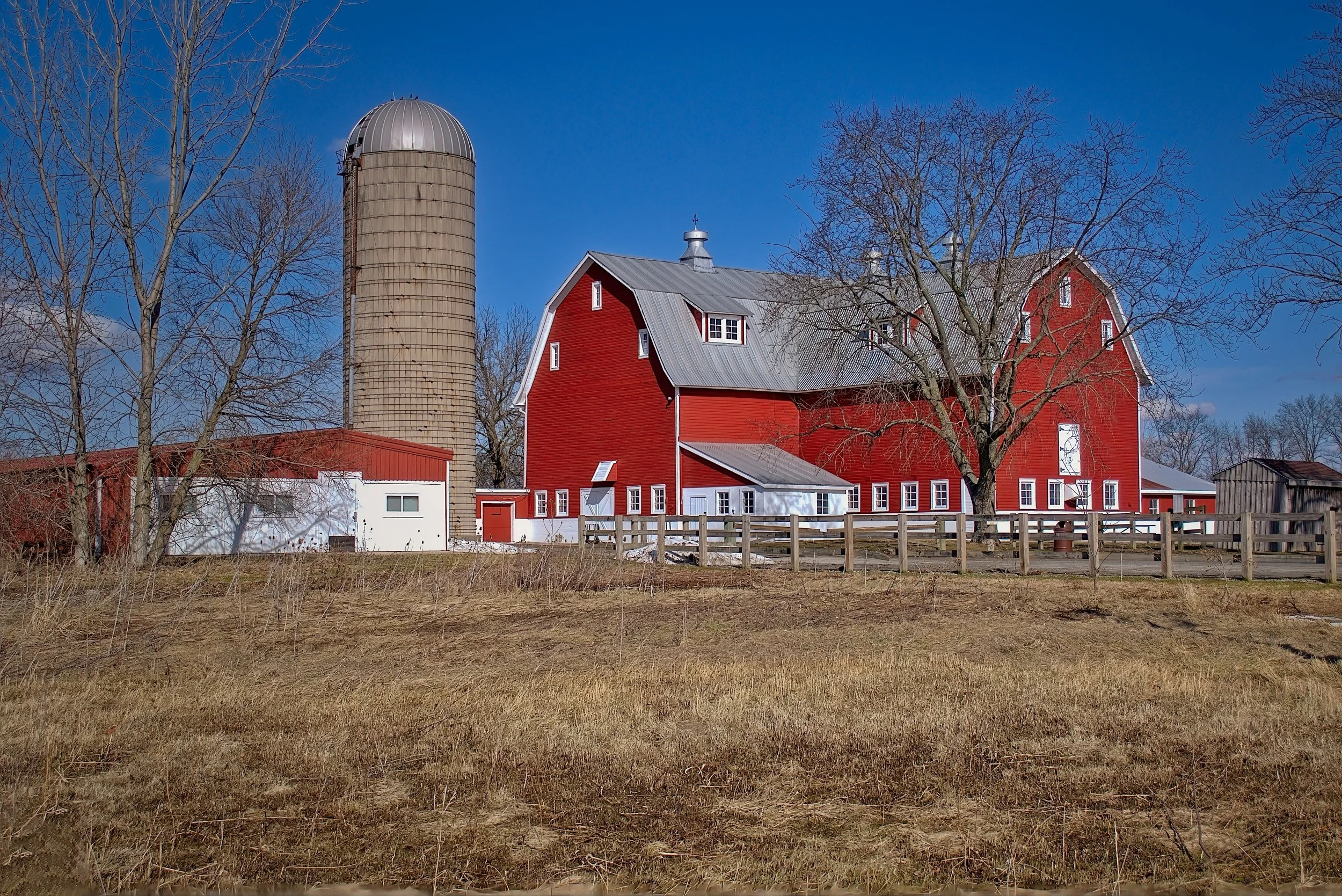
On the horizon, due west of the mall, a single plume of smoke. The smoke was near trees, but wasn’t billowy enough to be the trees themselves. It looked more like a controlled fire. And, beyond the smoke, just past the tops of the trees, there was the top of a silo. Sean knew that even before the world ended, farmers often burned their trash because there wasn’t trash pickup in rural areas. Maybe there was a farm out there that the Missionary plague hadn’t touched. He would have to find out.
3
The next morning, after breakfast, Sean drove out on Highway 30, past the mall, cutting over on various country roads until he was able to see the silo beyond the trees. He thought absently about how different the area was from the suburb where he lived, and from Dubuque proper. It was like the silo was the sentry marking the point where Dubuque ended and the endless farms and prairies of Iowa began.
Eventually, he found a driveway, which he followed through acres of overgrown hay and corn until he reached the farmhouse, barn, and silo. Sitting on a lawn chair, on the carefully mowed lawn in front of the farmhouse, was a woman of about 30. Pale, medium length-brown hair, she wore oversized sunglasses, a t-shirt and jean shorts. She had been reading a book, which she put in her lap as Sean drove up.
Sean put the truck in Park, opened the door, and stepped out.
“Hello!” he said. It was the only thing to say.
“Hello!” she said.
They stared at each other for a moment.
“I was expecting a farmer. Or a farmer and his family.”
The girl cocked an eyebrow. “How do you know I’m not a farmer? Or that I’m the farmer’s wife, and he’s in the barn, doing things?”
Sean shrugged. “If you were the farmer you’d be working, not reading. And everything except the lawn is overgrown.”
The girl nodded. “That’s true. Then again, why work the farm when everyone else is dead?” She smiled. “I’m Marianne.”
“I’m Sean.”
She smiled. “Hello, Sean.”
“I saw smoke coming from here yesterday so I decided to check it out.”
“I was burning trash.”
“Yeah, out here in the rural areas they don’t always do trash pickup.”
“Even less when the trashmen are all dead.”
Sean laughed. “Are you out here alone?”
Marianne paused a moment, staring at Sean. “It depends on how you look at it.”
Sean held her gaze. She was considering whether he was a threat. He tried to emanate charm, friendliness. He meant no harm; he just didn’t know how to be convincing and sincere without holding up a cartoonish white flag or standing there naked to show he wasn’t concealing weapons. Actually, standing naked would make her panic as well.
“What does that mean? Are there creepy children in the corn, serving the Scarecrow God and preying on unwary travelers?”
Marianne chuckled. “No.” She stood up and gestured. “See, I live in there, the silo. It was converted to a one bedroom apartment. That’s a thing now. I was renting from the family who owns the farm. They lived in the farmhouse. Nice people. I expect they’re all dead. Or they simply stopped coming out, like at all, ever, a couple months ago. Or eating. And they’re being super quiet. So, probably dead.”
“You haven’t been in there?”
“No. I didn’t go in there when they were alive. I kept to myself, paid my rent with an app, and waved when I saw them.”
“Did you smell anything?”
“This is a farm. There are always smells. The cow shits and it smells, the horses shit and it smells. The chickens shit and it smells.”
As if to drive home the point, somewhere, a cow mooed. Sean almost jumped at the sound.
“You still have cows?”
“Cow. This wasn’t much of a working farm, really. Not even a hobby farm. The family had the house, the corn field, the hay field, a couple of horses, a cow, a couple of chickens. Most of the animals are still alive. I milk the cow, feed the chickens. A couple of the chickens were eaten by predators, but there are two survivors. There’s plenty of feed in the barns, and hay. The cow can graze. Milking and shoveling poop are now in my skill sets. I didn’t need to think those things through too much. But I’m not too keen on going in the house to see what’s in there.”
“I wouldn’t think so,” Sean said. “What are you doing for food? Milk and eggs I guess?”
Marianne sighed. “Yeah, I have plenty of that. But I head to the local store or even the city when I need things. I can get gas for the generator, pick up canned goods and stuff like pancake mix. Prices are really good now, as you may have noticed.” She smiled.
“Yeah,” Sean said. “Fire sale everywhere.”
“They’re giving the shit away.”
Sean looked over at the house. “Tell you what. I’ve got a couple of masks in my truck, and gloves. How about I go in there and look around. If I find bodies, I’ll take care of it. Afterward, we can clean up the house and see what we can scavenge.”
“Sean, I couldn’t ask you to do that, it’s not your problem.”
Sean shrugged. “It’s the right thing to do. I’ve done it before. They were good to you, you should be good to them. And now you’re my nearest living neighbor.”
“Thank you.”
“How many were in the family?”
“Three. The couple and their son. He was about 12.”
“Fine.” He turned and reached into his truck, grabbing work gloves, goggles, and a surgical mask. He stood, put them on, and closed the truck door. “You wait here.”
4
It didn’t take long for Sean to find the bodies. What he found was nothing he hadn’t seen before, though he never liked seeing it. Putrefaction, maggots, flies, bodies, blood, rot, ancient shit and filth in an otherwise clean home. These were the hallmarks and legacy of the dead, and Sean was left to clean up after them. Humanity’s last janitor, a role he never applied for, nor wanted.
The boy was in his bed, his bed sheet serving as a shroud. Stuffed animals he had probably stopped caring about years before covered the bed. His blood had soaked through the sheet and soaked into their feet. Sean grabbed the corners of the top sheet and fitted sheet, bunched them together, and pulled everything off the bed in one bundle. He dragged the bundle out to the hall, dropped it, and gagging behind his mask, ran to the bathroom.
That only made matters worse. Hoping to simply run in, vomit, and then wash his face in the sink, Sean was instead met by the body of the man of the house, dead in the bathtub. Blood spattered the floor, the wall, and the tub, but the man had died by strangulation. One end of an extension cord was wrapped around his neck; the other end was tied to the shower head. The man had knelt down, then leaned forward until he blacked out and finally died. Not a pleasant way to die, but far easier than continuing to vomit blood. What was left of his face was black. His eyes were long since eaten. His tongue jutted from his mouth, dried and shriveled like a burnt sausage.
Sean vomited so suddenly he couldn’t make it to the toilet or sink. He grabbed the bathroom counter with one hand, pulled off his mask, doubled over, vomited again, then pushed himself out of the bathroom into the hall. He almost fell, then realized that if he did, he would be lying next to the body of the boy. He flung himself forward, stumbled away from the boy, and collapsed on all fours, dry heaving until his arms and legs were shaking and his stomach felt inside out.
Marianne called from downstairs.
“Are you okay?”
Sean thought for a moment as drool hung off his lip. Why lie? He probably puked so loudly she heard it outside.
“No.” He took a breath. “Don’t come up. I’ll be right down. Just...you don’t want to see this.”
He went down to the kitchen and cleaned his face, then finished wrapping the boy and his father and brought them outside. Marianne stood by her lawn chair.
“Is it bad?”
He shrugged.
“What are you going to do with them?”
“I figure bury or burn them. I still have to find the mother.”
“Do you want help?”
“I can do it.”
Marianne smiled. “I’m sure you CAN do it. But that wasn’t my question. Would you like me to help you?”
Sean thought for a bit. “Maybe. Let me get them out of here, then you can help me out.”
He dragged the bodies out behind the house, where he planned to bury them in view of the home where they lived together, then he met Marianne back at the front of the house.
“How about we find the mother? I’ll scout ahead; you stay behind. When I find her, I’ll pack her up while you stand by for moral support. It shouldn’t take long; I already did the downstairs and part of the upstairs.”
“I’m a big girl; I can help you look.”
“If you wanted to see what was in there, I expect you would have gone in by now.”
“Good point. I’m not much for smells or maggots.
“Me either.”
Sean found the mother in the master bedroom, in bed, covered with a sheet. There was already plastic sheeting draped over the bed, and flowers, long since dead and dried, on top of the plastic. It just took a few moments to roll the body up and drag it down the hall, where he saw Marianne.
“I’m not sure how I feel about cleaning up the puke and the other things,” she said. “I’m inclined to just stay in the silo.”
“I don’t blame you,” Sean said. He tugged the body past her, down the stairs, then outside. In the yard, Marianne picked up the other end of the body and helped Sean carry it behind the house with the others.
“There are probably shovels and things in the barn,” she said.
“You look there. I have a spade in my truck, too.”
Working together, they managed to dig a hole big enough for the three bodies by dark, taking breaks for snacks of water and Pop Tarts. At dusk, the two of them pushed the bodies in, looked down solemnly, then looked at each other.
“I’m fucking tired,” Marianne said.
Sean nodded. “I have blisters and pains in places I forgot I had. How about we fill in the hole tomorrow?”
Marianne nodded. “Agreed. Dinner?”
Sean shook his head. “At home, yeah. I need a shower a lot more than I need a meal.”
Marianne hid disappointment, but not completely. “How about lunch tomorrow, then we fill in the hole?”
“Sounds like a plan.”
5
The next day, Sean headed back over, driving not his truck or the backhoe he sometimes used, but a bulldozer that had been parked near a bridge that was now never going to be completed. Next to his seat was a cooler packed with a picnic lunch, a bottle of wine, and a six pack of beer.
“You brought lunch!” Marianne said.
“Of course. We said we were meeting for lunch.” He patted the cooler. “Here’s lunch. I baked bread for sandwiches, and made some blueberry muffins. Box mix.”
“Well, I got us some Lunchables,” Marianne said. “But I made real lemonade from concentrate!”
Sean laughed.
“And,” Marianne said, “I remembered the picnic blanket! That’s the most important part!” She held up the wicker basket that had been at her feet. Tucked under the handles was a perfectly folded blanket.
Sean nodded. “Red checks and everything! Very nice! I figured we’d eat inside, or on the bulldozer, maybe after a drive.”
“We have options,” Marianne said.
“We do.” Sean smiled. “How about you give me a minute to fill in the hole, then we go for a ride?”
“I like that idea. Have you operated one of those before?”
“As a matter of fact, I have. I drove it over here.”
Marianne laughed.
“Okay, before that part I pushed some stuff around to figure out the controls.”
“Good. I’d hate for you to hit the house.”
“I’ll try to avoid it.”
After the hole was filled, Marianne placed a marker and they climbed aboard the bulldozer, eating while they tooled around the surrounding area, then the farmer’s field, which Marriane had never even really walked.
“I figured my place was in the silo, and I was happy there. The family lived in the house and worked and lived on all the rest, so I kept to myself and stayed busy with work. I’m a technical writer.”
“Well, there’s not much to see,” Sean said. “Corn and more corn.”
Marianne laughed. “The few trees are near the house. Luxury items. Hey, pull in by the house again. I have to use the Little Girls’ Room.”
Sean drove the tractor back to the house and parked in front. Marianne hopped down and turned toward him.
“Want to see my place?”
“Sure.” Sean grabbed the cooler, as Marianne ran ahead to open the door.
“Make yourself at home,” she said. “Sorry I can’t give you a tour right away. Now that we’re back, I’ve really gotta go!”
Sean had never been in a converted silo before. He had seen pictures online of missile silos and warehouses converted into apartments and houses, but his experience with silos had been of the traditional variety, seeing them filled with grain, or abandoned and left in disrepair.
In this case, Marianne’s home appeared to be like any other small house, only the walls were round. A small kitchen was to the right of the entrance. Beyond that, a living room with several bright windows. To the left, there was a staircase circling down. Tile floors in the kitchen, carpet in the living room and on the stairs
Sean put the cooler down on the kitchen floor. A moment later, he heard a flush, and a moment after that, Marianne came out of a door on the far side of the living room. She saw him and smiled.
“So! What do you think” she asked.
Sean looked around, nodding.
“I like it! It’s cozy without being cramped. Very nice!”
“Thanks, I like to think so,” she said. “Let me show you the rest.”
She led hm downstairs, flipping a light switch on the wall as they descended.
The lower level was one room, carpeted, with no windows. Recessed lighting was spaced among the ceiling tiles, much like other Midwestern basement rooms, but at the moment the room was lit by a standing lamp in one corner and a smaller lamp on the nightstand, next to a queen-sized bed. Opposite the bed was a flat-screen TV at least 20 years old, standing on a shelving unit. On the shelf with the TV were both a VCR and a DVD player. DVDs and videotapes were stacked on the players, the shelving unit, and on the floor.
Sean walked over to the shelving unit and glanced at the titles of the movies.
“Nice collection!”
“Thanks! I never really got into streaming anything. Most of the movies I like aren’t online anywhere. I can only find them through smaller labels that specialize in giallo and horror.”
“You’re a Cronenberg fan!” he said.
“Sometimes. Not the really grisly ones, aside from ‘Videodrome,’’ she said. “That one is a must-see just for Debbie Harry.”
“Absolutely! That’s a nice run of Dario Argento, too.”
“Thanks! Dario is amazing, but I really adore his daughter, Asia. Have you seen, ‘Scarlet Diva’?”
“I haven’t even heard of it.”
Marianne walked over and pulled a DVD from the stack on the floor.
“It was her pet project, an autobiographical film she wrote, directed, and starred in. Have a seat, I’ll go get the wine.”
Sean felt himself flush a bit as Marianne scampered up the stairs. Seeing no place else to sit, he sat on the edge of the bed, hands folded carefully in his lap.
Marianne returned with the wine and two glasses. She handed a glass to Sean, put the bottle on the floor, popped in the DVD, and sat down. She looked at him.
“We’re not so old that we have to sit this close to the TV. Come on, sit back here so we can lean against the headboard. I promise I won’t bite.”
Sean did as she asked of him, and once they were situated, she filled his glass and pushed Play on the remote.
Sean sipped his wine.
“That’s pretty good! I’m usually a beer guy when I drink, which isn’t often, but that’s decent.”
Marianne took a drink. “That is nice. I usually drink blush wine, or box wine, or even blush box wine, which I know is tacky, but who’s going to judge now? We’re probably the only wine lovers left alive, so screw the rules.”
Sean laughed. “We make the rules now.”
They clinked glasses. “To blush wine!” Marianne said.
“Cheers!”
They watched the film and drank, each of them filling the other’s glass as it emptied.
Gradually, as they relaxed, Marianne leaned closer, finally resting her head on Sean’s shoulder. He was expecting the contact and wasn’t sure how he felt about it, but he didn’t move. Eventually, he felt himself soften and he put his arm behind her back, his hand resting on her hip.
The wine had made him sleepy, and the room, while cool, felt a bit stuffy. He leaned back further and Marianne leaned into him more. The smell of her hair triggered a memory and a feeling he couldn’t immediately place. It was a vaguely grapeish smell that somehow made him think of kangaroos.
Trying to place the memory absorbed his full attention, distracting him from the film, which wasn’t that difficult. As far as he could tell, the film was essentially about Asia Argento living a life of depravity, excess, and random sex, then pondering how to change her behavior when she learns she’s pregnant. While Sean wasn’t sure what to make of the plot, he was increasingly a fan of Asia Argento’s outstanding figure, her pretty face, and perfect tits, and he admired the courage it took to do a scene of full-frontal nudity in which she invited the viewer to examine her body at length, as she examined herself and presumably her life.
Purple. Aussie. Aussie brand shampoo. That was it! Kangaroo logo.
Sean smiled in relief at solving the mystery of the smell, then felt himself becoming erect, due more to associative memory than the film, or the soft warmth of Marianne curled into his left side.
He now remembered, fondly, that his sister started using Aussie shampoo when she was in high school. Three years older than him, she was about 16 when he was 13, and they shared a bathroom. Sean remembered getting ready for school and seeing the bottle in the shower caddy, catching the lingering scent of the shampoo as he got in the shower. He opened the cap, squirted a bit in his hand, and smelled it. He liked the way it smelled, but with the dollop in his hand, he also liked the light purple color and the texture.
Without thinking, he rubbed it on himself. While he used his own shampoo to clean his hair, from that day forward, he used his sister’s shampoo to masturbate every day for the next four years, until he went to college, and any time he was home after that.
He was fully erect now, something that didn’t escape Marianne’s notice. She simultaneously tilted her head upward and back for a kiss while putting her hand on the bulge in his pants. They kissed, and while he had arrived with intent of doing no more than having lunch and burying bodies, he knew as soon as Marianne invited him inside, and especially when she took him downstairs, that the afternoon might lead to this.
He let nature take its course, giving way to things he hadn’t experienced since long before the Missionary Disease wiped out most of, if not the rest of humanity.
He slid back and to the side, and Marianne threw one leg over his hips to lay on top of him, immediately bucking her hips against his, building a rhythm.
Sean moved his left hand from her hip to the swell of her bottom while his right hand went up her back and into her hair. His fingers ran through her curls, then gently pressed against the base of her head, pushing her closer to him.
Marianne pulled back from their kiss and sat up on him, using her hands to put his hands on her breasts. She pressed his hands against them hard, encouraging him to knead them. He did, and surprised himself when a moan escaped his mouth.
She bucked against him harder, and he could feel her warmth even though his jeans. She bucked again, sighing, and as Sean fully concentrated on the feel of her breasts under his hands, the feel of her nipples stiffening against his palms, he came.
He stopped moving, panicked.
She stopped moving and looked at him, momentarily confused. Then, realization dawned on her and she climbed off, laying down beside him with her head on his chest.
“It’s okay,” she said. “It’s probably been a while.” She laughed. “It would have to be.”
“Sorry,” he said. “Out of practice.”
“Me, too,” she said.
They lay together for a while, until he got up to clean himself in the bathroom connected to her bedroom. He glanced at the bottle of Aussie in her shower, wondering if he should blame it, his own age, or the excuse of lack of activity. He shrugged. The result was the same.
They finished watching the movie and Sean decided to go home. They kissed goodbye, awkwardly, at her door. Then, as Sean was about to climb back on the bulldozer, she called to him, ran out, and threw her arms around him for a hug.
She looked up at him. “I had a great day,” she said, smiling.
Sean smiled. “Me, too.”
“Come back soon,” she said.
“I will.”
6
The next day, Sean went to Target, then back to see Marianne at the farm.
He knocked on Marianne’s door, reminding himself to smile as he waited.
She came to the door wearing a t-shirt and sleep shorts, her hair mussed and her eyes bloodshot.
“Hey!” she said.
“Hey there!” Sean said. “I thought I’d drop by. I got you something.” He held out a wrapped present, topped with a stick-on bow.
“Thanks!” Marianne said.
Sean smiled faintly. “Sorry the wrapping is sloppy. I wrapped it myself.”
Marianne smiled and shrugged slightly. “Of course. You’d have to.”
Sean laughed.
“C’mon in,” Marianne said. She left the door open and they walked in. Marianne sat down on the living room couch and Sean sat beside her. She opened the gift, letting the wrapping paper drop down to the floor.
“Walkie talkies!” she squealed.
Sean nodded and pulled a small package from his shirt pocket. “With batteries!”
He handed them to her, and pointed at an area on the front of the walkie-talkie box. “Check out the range, 15 miles! That’s more than enough for us to talk when we’re not together.”
“Because our phones don’t work,” Marianne said.
“Right!”
She looked at hm, “I don’t get why our phones don’t work.”
“Mine worked for a while,” he said. “My guess is either the networks need to be maintained regularly, and there’s no one to maintain them, or payments, even with auto-pay, need to be processed at some point, and they haven’t been. So things shut down.” He tapped the box of walkies. “Not a problem with these!”
“Let’s try them out!” Marianne said, opening the box. She put batteries in each walkie.
“You don’t want me to go, do you?” Sean asked. “I just got here!”
“No!” She handed him a walkie talkie. “You go outside and I’ll go downstairs.”
“Okay.”
Sean went outside, closing the door behind him. He climbed into his truck and turned on his walkie, pushing the SPEAK button.
“You there?”
Marianne’s voice came in loud and clear. “10-4 good buddy, I’m here!”
Sean smiled. “Looks like they work!”
“Looks like!”
“I feel like I should say something important. Like enemy coordinates or mission status or something.”
“Agent Sean, provide mission status. Over.”
Sean laughed. “Control, this is Agent Sean. Request permission to come in.”
“Permission granted.”
“Good. You stay there.”
7
It was better the second time. Less awkward, more normal, but still not without problems. This time they were at least undressed before it was over. Sean apologized again and Marianne seemed unconcerned.
As they cuddled, she opened the drawer of her bedside table and took out a joint. She lit up, took a deep drag, and held out her hand to pass to Sean.
“No thanks,” he said.
She exhaled and looked at him.
“Is it a problem?” she asked.
He shook his head and smiled faintly.
“No, do what you want. It’s just not my thing.”
“How come?”
“Never has been. If this is it, I want to see it all coming with absolute clarity. I want to look Death in the face.”
Marianne shrugged and took another hit.
“Not me. Behind the silo is the only crop I grow on this farm – weed. If this is how the world ends, I want to die stoned. I’d just rather think this was all a dream. And to do that, maybe I want the world to feel dreamy all the time.”
“That makes sense,” Sean said.
“And it helps me feel. You want to see everything; I want to feel everything. If I’m sad or lonely, I want to feel the most sad or lonely. Or angry. Or happy. I want all the feels. While dreaming.”
Sean nodded, then they lay in silence while Marianne smoked and absently ran her fingers along Sean’s arm. He tried to ignore the dry feel of her fingers on him, the smoke surrounding them, and the way she wiggled her head slightly when inhaling. He looked around the room and noticed a bit of spider-web in one corner, dust on the mirror, and the bits of ash and weed shreds flaking on the bedclothes. He tried and failed to resist counting the minutes until he could politely leave.
8
Over the next three days, Marianne made picnic lunches for them, each a little nicer than the last, each eaten in a different location. On the fourth day, she told Sean to come by in the late afternoon. When he did, he found she had cooked dinner: chicken parmesan with a side of pasta, a bottle of wine, corn, and a yellow cake with chocolate icing.
Afterwards, they did the dishes, then sat outside until the stars came out, marveling at how many more stars could be seen, now that there was no light pollution from the city.
When the mosquitoes started biting too much, they went inside, where they fell asleep watching the extended version of “The Fellowship of the Ring.”
The next day, Sean got up and left before dawn. Sometime after 9, he heard Marianne’s voice on his walkie talkie:
“Where are you?”
“You’ll see,” he replied. “It’s a surprise. Can’t talk now.”
“Ooh! I like surprises! Sounds top secret! See you soon!”
A little after noon, Sean returned. As he pulled into the driveway, he said on the walkie:
“I’m back. Don’t come out yet. I’ll come get you. More work to be done.”
“Okay.”
He parked and hefted a deer carcass out of the back of his truck and into the family’s house. Around 4, he went to the patio behind the house and started up the grill. At 5, he called Marianne on the walkie:
“Come on out! Hope you’re hungry!”
A few moments later, Marianne came out, dressed in a summer dress, red with white polka dots. She followed Sean out behind the house, where he had set the patio table with a table cloth, candles, and two place settings. He pulled out Marianne’s chair for her and pushed it back in.
“Thank you, sir,” she said, flashing a smile.
“Be right back,” he said, then went in through the patio door. A moment later, he returned with a platter of meat and another of steak fries. He filled Mariann’s plate, then his own, and sat down.
“Oh my God! Steak? You found steak?”
Sean smiled.
Marianne cut a piece and ate it, no longer trying to be dainty. She furrowed her brow.
“Why does it taste funny? Was it frozen? Of course it was frozen. Anything not frozen would be rotten by now.”
“It wasn’t frozen. The potatoes were frozen. The steak was not. Fresh today.”
“What?” She looked at her steak. “You killed a cow? How the fuck did you kill a cow? Did you kill MY cow?”
“I didn’t. Your cow is fine. I could have killed some other cow I guess. But better. I made venison.”
“What?” She paused and looked at her steak again. “You killed Bambi? I’m eating a deer?”
“Yeah. I hadn’t gone hunting in years. Didn’t have reason to after my dad died when I was 16. Now I do. I wanted to surprise you.”
She stopped chewing. “I don’t think I can eat this. You killed a deer.” She looked around. “Where did you cut it up?”
“I field dressed it right after I shot it, then brought the rest here. I spent all afternoon cutting it up there inside the house. My dad used to take me hunting all the time when I was a kid. My uncle worked at the local meat market. He did taxidermy, he could mount a fish for you, mount deer antlers, turkey claws, I even saw him stuff a coyote once. But most of the time he just processed the meat for hunters. He’d charge a fee and keep some of the meat to sell at his shop. Standard thing. He showed me how it was done and I remembered better than I thought I would.”
Tentatively, Marianne cut off another piece, held it in front of her face, and looked at it.
“I feel so bad. He couldn’t hurt anything. And they’re so cute.”
“And delicious,” Sean said. He had already eaten at least four pieces, and he was going for number five. He was also making quick work of his fries.
“This would be great with a salad,” he said. “But we know that’s not going to happen.” He looked up and clapped his hands. “Oh waiter!” He looked at Marianne. “See? Terrible service. No tip.”
Marianne put down her fork. “I can’t do it. I appreciate the effort, this is all lovely, but I just can’t do it. I’ll eat the fries, and bring out the rest of the cake.”
Sean shrugged. “More for me.”
9
Marianne started smoking immediately after dinner as she sat on the patio chair. Sean was inside doing the dishes himself. The sound of “Sleepwalk” by Santo and Johnny came from Bluetooth speakers Sean had put on the patio, played from his phone. The latest track from a playlist he had arranged for her. Their phones were still somewhat useful, it seemed.
Sean came out with two steaming cups of coffee.
“Dishes are done. Ready for dessert?”
“Sure.”
Sean sliced pieces of cake for each of them. They ate cake and sipped their coffee. Marianne looked at him and listened to the music.
“This is nice,” she said. “We should get some tiki torches. Maybe the kind with citronella to keep the mosquitoes away.”
“Good idea,” Sean said. “You know, they might have some in the garage. I can look tomorrow.”
“Ok,” Marianne said. She continued looking at him. She smiled. “Tell me a story,” he said.
Sean looked surprised. “What kind of story? Like a fairy tale?”
Marianne shrugged. “I don’t know. Make something up.”
“I’m not much of a storyteller.” He thought for a moment, then grinned. “Fine. Here you go: Once upon a time there was a couple, the O’Yings. Ann and Arn.”
Marianne laughed. “O’Ying? Were they half Irish and half Chinese?”
“Could be. They were an older couple. Ann was chubby and she had a penchant for printed dresses that looked like they were made from excess cloth from a 1960s couch. When she wasn’t wearing one of those, she was wearing the stretch top and yoga pants she used to wear to her aerobics class in the 80s, and her jazzercise class in the 90s. She sometimes wore her leg warmers as well, but now they started to itch and give her a rash around her ankles. She imagined herself an excellent cook, due to her encyclopedic knowledge of Minnesota hot dishes. She prided herself on being able to make one out of anything, as long as she also had Campbell’s cream of mushroom soup, which she always did. Her cooking universe really exploded, however, when she bought the cookbooks for Dump Dinners and Dump Desserts off of the Home Shopping Network. She bragged to friends that she never knew how easy cooking was, or how much she enjoyed it, until she got those cook books.
“For his part, Arn was a simple man. He managed the Grain and Feed Store he had inherited from his father, a business he had grown up in, starting out sweeping floors and moving on to be top dog after his father died. He had been at the job for so long he didn’t have to think much about what he did anymore, or anything else. He just came in and did it, leaving at the same time every day, coming home at the same time, rarely speaking, rarely doing much. He enjoyed fishing and golf, never catching anything big enough to keep, never winning a game, but always showing up, always seeming to enjoy himself. He wore bright plaid pants when he played, and a knit cap Ann made for him with a tassel on top that looked like a golf ball. It was about the limit of his ability to be fun or whimsical.
“Arn made sure to tend his lawn every week, keeping it like the green postage stamp he thought it should be. He never used it or went out on it other than to cut it. It was just one of his duties, just as Ann vacuumed, made beds, changed sheets, and washed socks, week in, week out. An exciting week was if Ann asked Arn to kill a bug that made its way inside the home. Neither of them could tell you who was president or governor without having to remember what year it was. They never watched or read the news outside of sports or the weather, but they always voted.
“Down the street from them were the O’Yances, Arnie and Annie…”
Marianne squinted. “Oh. Ann O’Ying. Arn O’Yance. That’s so bad. That’s worse than a Dad joke.”
Sean smiled. “Is it? Can I make a Dad joke if I’m not a dad?”
She shook her head. “It’s so bad. So, you’re saying these people are annoying? What happens to them?”
Sean smiled wider. “They die. They all die. Everyone dies in the plague. And the world lives happily ever after.”
Marianne gasped. Sean continued smiling. “That’s awful. You’re glad everyone’s dead? What the fuck is the matter with you?”
Sean shrugged. “Not everyone. I didn’t know everyone. There were people I liked, some more than others. But overall, I like the quiet, and it doesn’t bother me that they’re all gone. Fuck ‘em. The world was a shithole and nothing anyone did was making it any better. Not for 5,000 or 10,000 or however many years civilization had been around. What was good, we have right there in our music, our movies, our books. The rest, all of it, the politics, the gossip, the meaninglessness of our everyday lives, the bills, the economy, all of that, gone, and I don’t miss it.”
“I don’t miss all of that either,” Marianne whispered. “But to wish all those people dead, to be glad, that’s horrible. I... I’m going inside. Good night.”
Sean watched her go in. He cleared the table and went home.
Epilogue
Three weeks passed. Sean looked at his walkie, thought about picking it up, but never did. For her part, Marianne was also silent. At times, their hands seemed to itch, wanting to pick up the walkie and connect. This, combined with a nagging urge at the back of the brain that one of them, someone, should say something. Yet no one did. They simply returned to their old routines of foraging and simple existence. Finally, Marianne’s voice came over the walkie:
“Hey. I’m sick.”
Sean picked up the walkie.
“Hey. Sick how? Regular sick or sick sick?”
“I don’t know. It’s been a few days. I can’t eat. My head is pounding like crazy. My guts hurt. I don’t want to be alone.”
“I’ll be right there.
Sean arrived in under a half hour. He let himself in and found Marianne on her couch, wrapped in a blanket. On the floor next to her was a bucket, a bottle of Gatorade, and a box of saltines.
“Looks like you have all the things for being sick.”
“Yeah.”
He felt her forehead.
“You have a mild fever.” He looked around and frowned, then went downstairs. Two minutes later, he returned, carrying an armload of clothing and a pillow.
“I brought stuff from my place,” he said. He put the pillow down on the floor, along with a blanket, and put his clothes down on the kitchen counter. “Just take it easy. You’ll be fine.”
Marianne slept for a bit. When she awoke, Sean was still there, lying on the floor.
“I put fresh sheets on your bed, so you can go in there when you want. I’ll put on the tv. Have you seen ‘Firefly’? I brought that from home, too.”
Marianne dozed throughout the day, and Sean sat beside her, giving her water and saltines. Eventually she was able to have some broth and banana baby food.
“Tomorrow we’ll try some soft-boiled eggs and toast,” he said, and she nodded.
That night, Marianne slept on the couch, but the next day she moved to the bedroom. Her stomach pains increased, as did her fever. He gave her aspirin, put a cold, damp cloth on her forehead, and gave her ice water until the fever died down. She started throwing up, but only twice.
Finally, the fever broke, and she slept peacefully again. Sean sat next to her on the bed, stroking her hair. When she woke, she smiled.
“Hi.”
“Hi,” Sean said. “How do you feel?”
“Better. I’m actually hungry.”
Sean smiled. “Good. I’ve taken care of the horse, cow, and chickens while you were out. You’re right, we’re not going to run out of milk or eggs. I refilled the gas in the generator, too. But I’ll have to put some solar panels up and chop wood. Gas is only good for so long, and it won’t be good much longer.”
Marianne smiled faintly. “I think I’d like a shower.”
“Careful getting up.”
Marianne nodded. She was unsteady on her feet, so he helped her to the bathroom. She showered while he changed the sheets in the bedroom. After her shower, she got dressed. Sean got up to leave, to protect her privacy.
“Stay. It’s okay,” Marianne said. Sean sat back down on the bed.
“I’ve been meaning to ask you about that locket,” he said. “You always wear it. What’s the significance? Was it your mother’s?”
Marriane touched the cameo locket, which hung just above her breasts.
“No. My grandmother gave it to me when I turned 18.” She opened it. “See? Here’s a picture of me on my 18th birthday. The other side is empty. She said that’s where I’ll put the picture of my true love, my soulmate.”
She closed the locket.
“So, I keep wearing it. I know I’ll find him someday.”
Thanks to McLynda Dienberg for technical assistance, and Layla Velasquez, Deb Gilbert, Chelsea Moskow, Brian Cern, Colton Claye, Susan Savage Lee, and Tamara Binsfeld for feedback and edits.